Dreams have fascinated humanity for thousands of years. Ancient civilizations believed dreams were messages from gods, glimpses into the future, or symbolic warnings. Today, while dream interpretation remains popular, modern science has taken a different approach by exploring what actually happens inside the brain during sleep.
Although researchers still don’t fully understand why humans dream, decades of neuroscience and sleep research have uncovered important clues. Dreams appear to be connected to memory, emotions, learning, creativity, and overall brain health. Rather than being random mental images, dreams may play a meaningful role in how our minds process daily experiences.
In this guide, we’ll explore the science behind dreaming, the different stages of sleep, leading theories about why dreams occur, and what researchers have discovered about the sleeping brain.
What Is a Dream?
A dream is a series of thoughts, images, emotions, sensations, and experiences that occur while we sleep. Dreams can be vivid, emotional, confusing, exciting, frightening, or surprisingly realistic.
Some dreams follow logical storylines, while others jump rapidly between unrelated events, people, and places.
Although dreams can happen during multiple stages of sleep, they are most commonly associated with Rapid Eye Movement (REM) sleep.
Understanding the Sleep Cycle
To understand dreaming, it’s helpful to understand how sleep works.
A typical night’s sleep consists of several repeating cycles lasting approximately 90 minutes each.
Each cycle includes two major categories:
Non-REM Sleep
Non-REM sleep includes several stages that gradually transition from light sleep into deep sleep.
During these stages:
- Heart rate slows.
- Muscles relax.
- Breathing becomes steadier.
- The body repairs tissues.
- Growth hormones are released.
- Physical recovery occurs.
Dreams can happen during non-REM sleep, but they are usually less vivid.
REM Sleep
REM sleep is the stage most closely associated with vivid dreaming.
During REM sleep:
- Brain activity increases dramatically.
- Eyes move rapidly beneath closed eyelids.
- Most muscles become temporarily inactive.
- Emotional processing becomes highly active.
- Dreams become longer and more detailed.
Adults typically spend about 20–25% of their sleep in REM.
Why Do We Dream?
Scientists have proposed several theories to explain why dreams occur.
Rather than supporting a single explanation, many researchers believe dreaming serves multiple purposes.
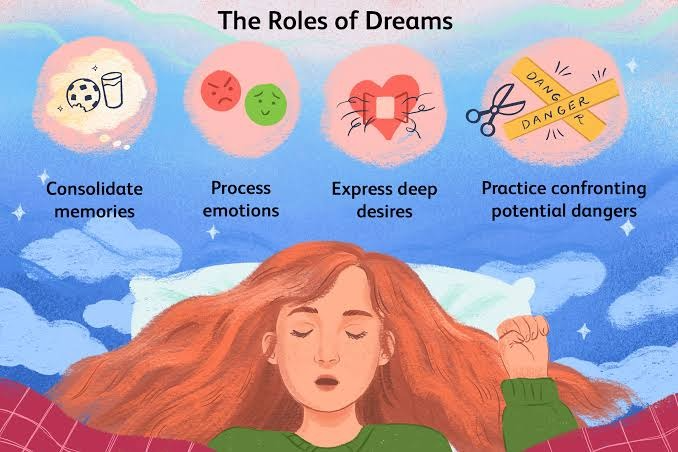
Memory Consolidation
One leading theory suggests dreams help organize memories.
Throughout the day, the brain receives enormous amounts of information.
During sleep, especially REM sleep, the brain may:
- Strengthen important memories
- Remove unnecessary information
- Organize experiences
- Improve learning
This process may explain why studying before sleep sometimes improves memory retention.
Emotional Processing
Dreams may also help people process emotions.
Events that trigger excitement, stress, sadness, or anxiety often appear in dreams because the brain continues working through emotional experiences during sleep.
Researchers believe dreaming may help reduce the emotional intensity associated with difficult experiences over time.
Problem Solving and Creativity
Some people wake up with solutions to problems they couldn’t solve the day before.
Many scientists believe dreaming encourages creative thinking by allowing the brain to form unusual connections between ideas.
Famous inventors, artists, and writers have credited dreams for inspiring important discoveries and creative breakthroughs.
Brain Maintenance
Another theory suggests dreaming is part of the brain’s ongoing maintenance system.
While we sleep, the brain remains highly active by:
- Strengthening neural connections
- Removing unnecessary information
- Reorganizing memories
- Supporting healthy cognitive function
Dreaming may simply be one visible result of these complex neurological processes.
Why Dreams Feel So Real
Many dreams seem incredibly realistic.
This occurs because several brain regions involved in perception, memory, and emotion remain highly active during REM sleep.
Meanwhile, the area responsible for logical reasoning becomes less active.
As a result:
- Strange events seem normal.
- Time behaves differently.
- People change identities.
- Impossible situations feel believable.
Only after waking do many people recognize how unusual their dreams actually were.
Why We Forget Most Dreams
Many people remember only fragments of their dreams—or none at all.
Scientists believe this happens because the brain processes dream memories differently than waking experiences.
Several factors influence dream recall, including:
- Sleep quality
- Sleep interruptions
- Stress levels
- Individual brain activity
- Timing of awakening
People who wake naturally during or shortly after REM sleep are generally more likely to remember their dreams.
The Connection Between Dreams and Mental Health
Dreams often reflect emotional well-being.
Periods of stress may produce:
- Anxiety dreams
- Nightmares
- Recurring dreams
Positive life experiences can also influence dream content.
While occasional disturbing dreams are normal, frequent nightmares that interfere with sleep may warrant discussion with a healthcare professional.
Can Dreams Predict the Future?
Despite popular belief, there is no scientific evidence that dreams can reliably predict future events.
However, dreams often combine memories, emotions, expectations, and subconscious thoughts in ways that can feel surprisingly meaningful.
This may explain why certain dreams appear to “come true” through coincidence or because they reflect existing concerns and expectations.
Why Do Dreams Sometimes Repeat?
Recurring dreams are surprisingly common.
Researchers believe they may reflect:
- Unresolved emotions
- Ongoing stress
- Repeated life challenges
- Persistent worries
As underlying issues change, recurring dreams often become less frequent.
Lucid Dreaming
Lucid dreaming occurs when someone becomes aware they’re dreaming while still asleep.
Some lucid dreamers can even influence the direction of their dreams.
Researchers continue studying lucid dreaming because it offers unique insights into consciousness, sleep, and brain activity.
Potential applications include:
- Nightmare treatment
- Creativity enhancement
- Skill rehearsal
- Scientific research
Technology Is Helping Scientists Study Dreams
Advances in artificial intelligence and brain imaging have improved researchers’ understanding of sleep.
Modern technologies now help scientists analyze:
- Brain wave patterns
- Sleep cycles
- REM activity
- Emotional processing
- Memory formation
AI is increasingly used to process large amounts of sleep data, identify patterns, and support research into neurological health.
Similarly, AI-powered technologies are transforming many digital platforms beyond scientific research. Services such as TMTCash continue adopting intelligent systems to personalize user experiences, improve navigation, and enhance overall platform performance, illustrating how AI is becoming a valuable tool across diverse online environments.
Can You Improve Dream Recall?
Yes.
People interested in remembering more dreams often benefit from healthy sleep habits.
Helpful strategies include:
- Getting enough sleep
- Keeping a dream journal
- Avoiding excessive alcohol before bed
- Maintaining a consistent sleep schedule
- Waking naturally when possible
Recording dreams immediately after waking significantly increases recall.
Healthy Sleep Supports Healthy Dreaming
Good sleep hygiene benefits both physical and mental health.
Recommended habits include:
- Following a regular bedtime.
- Limiting caffeine late in the day.
- Reducing screen exposure before sleep.
- Keeping the bedroom cool and quiet.
- Exercising regularly.
Healthy sleep improves overall cognitive performance regardless of dream recall.
The Future of Dream Research
Dream research continues evolving rapidly.
Scientists are investigating:
- How dreams influence learning
- The relationship between dreams and memory disorders
- AI-assisted sleep analysis
- Emotional regulation during REM sleep
- Brain activity associated with dream formation
Artificial intelligence is expected to accelerate discoveries by identifying subtle patterns within enormous datasets that would be difficult for humans to detect manually.
Outside healthcare and neuroscience, AI also continues reshaping digital experiences. Platforms like TMTCash Casino demonstrate how intelligent technologies can personalize interactions, strengthen security, and improve user engagement, highlighting the growing influence of AI across countless industries.
Frequently Asked Questions
Why do humans dream?
Scientists believe dreams are connected to memory consolidation, emotional processing, learning, creativity, and overall brain function. While no single theory explains every dream, research suggests dreaming plays an important role in maintaining cognitive and emotional health.
Do all people dream?
Yes. Most people dream several times each night, although many dreams are forgotten shortly after waking.
Why are some dreams so strange?
During REM sleep, emotional and visual brain regions remain highly active while logical reasoning is reduced. This combination often produces unusual storylines and unrealistic situations that feel believable until you wake up.
Can dreams improve creativity?
Research suggests dreams may encourage creative thinking by allowing the brain to form unexpected connections between ideas, memories, and experiences.
Is dreaming necessary for healthy sleep?
Dreaming appears to be a natural part of healthy sleep. While researchers continue studying its exact purpose, REM sleep and dreaming are believed to contribute to memory, emotional well-being, and cognitive function.
Final Thoughts
Dreams remain one of the most fascinating aspects of human consciousness. Although science has yet to uncover every answer, research increasingly shows that dreaming is far more than a collection of random images. It is closely linked to memory, emotional regulation, creativity, learning, and the brain’s ongoing efforts to organize information gathered throughout the day.
Whether your dreams are vivid adventures, puzzling stories, or fleeting fragments you barely remember, they offer a remarkable glimpse into the complexity of the sleeping mind. As neuroscience and artificial intelligence continue advancing, our understanding of dreams will likely deepen, revealing even more about how the brain works while we sleep—and why dreaming remains an essential part of the human experience.