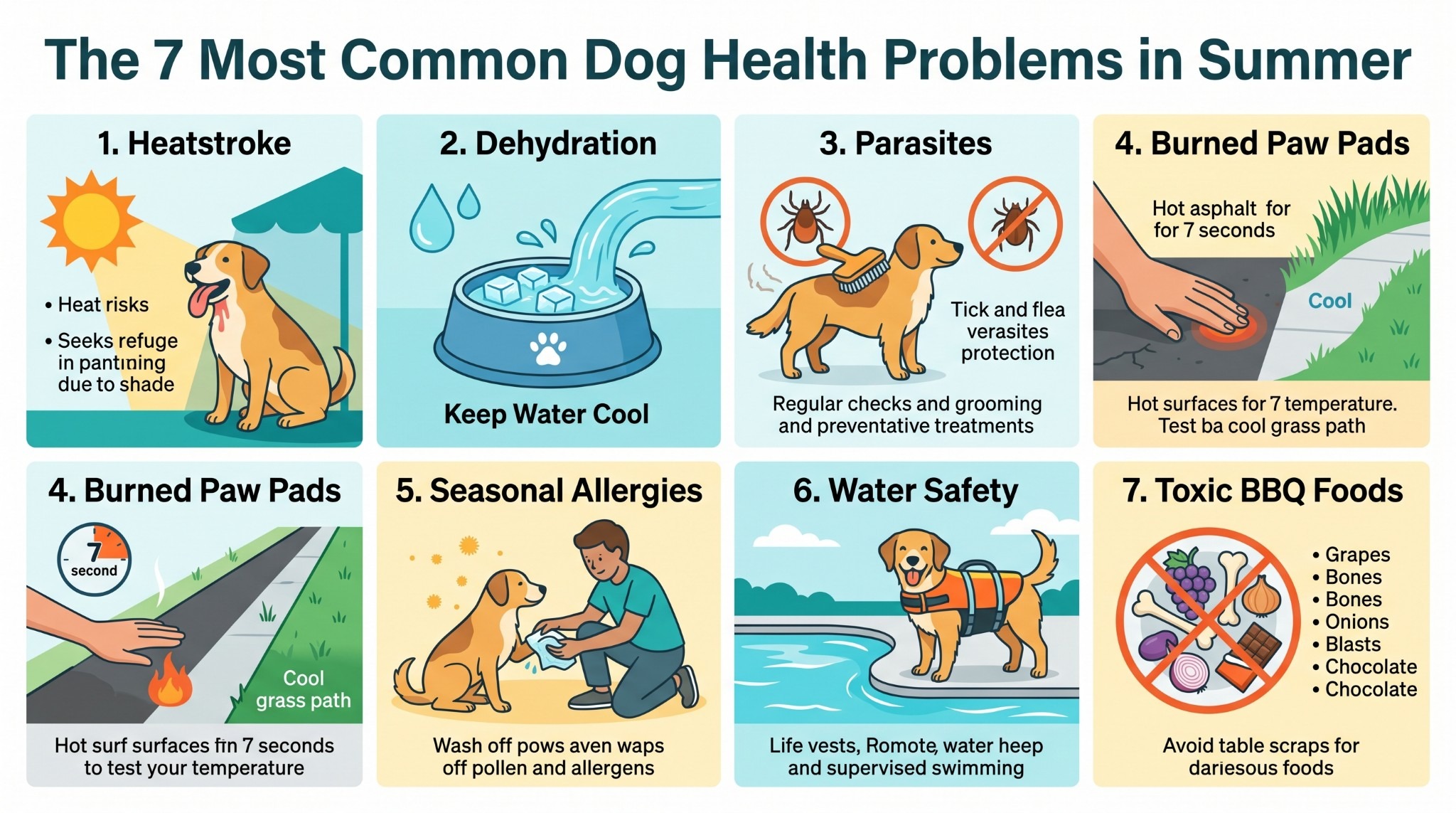
Summer can feel like the best season to be a dog. There are longer walks, backyard adventures, lake days, road trips, and plenty of opportunities to nap in a sunny spot. Unfortunately, warmer weather also introduces a few health risks that pet owners should keep on their radar.
Fortunately, many common summer problems are preventable. Staying consistent with hydration, grooming, parasite prevention, and everyday routines, such as offering dental chews, can help your dog remain comfortable and healthy. By recognizing the early warning signs of seasonal trouble, you can act quickly and get back to enjoying the sunshine together.
1. Heat Exhaustion and Heatstroke
Dogs do not cool themselves as efficiently as humans. They primarily regulate their body temperature through panting and their paws, which may not be enough during intense heat or physical activity.
Excessive panting, heavy drooling, weakness, vomiting, confusion, and bright red gums can signal heat exhaustion or heatstroke. Move your dog into a cool area immediately and contact a veterinarian if symptoms appear. Prevent overheating by scheduling walks during cooler hours, providing shade, and never leaving your dog inside a parked vehicle.
2. Dehydration
A playful dog can become dehydrated surprisingly quickly on a hot day. Panting, exercise, and limited access to clean water can all contribute to fluid loss.
Warning signs may include dry or sticky gums, low energy, sunken eyes, and a reduced appetite. Keep fresh water available indoors and outdoors, and carry a portable bowl during walks or outings. Adding a few ice cubes to the water bowl can also make hydration more appealing, although ice should never replace access to plenty of liquid water.
3. Fleas, Ticks, and Mosquito Bites
Warm weather creates ideal conditions for fleas, ticks, and mosquitoes. These pests can cause itching and skin irritation, and some may transmit more serious illnesses.
Use veterinarian-recommended preventive products consistently throughout the season. After hikes, park visits, or time in tall grass, check your dog’s coat, ears, paws, and skin for unwanted hitchhikers. Regular grooming can make these inspections easier.
4. Burned or Injured Paw Pads
Pavement, sand, artificial turf, and pool decks can become painfully hot in direct sunlight. Before walking your dog, press the back of your hand against the surface for at least seven seconds. If it feels uncomfortable to you, it is probably too hot for their paws. Choose shaded routes or grassy areas, walk in the morning or evening, and watch for limping, redness, blisters, or persistent paw licking.
5. Seasonal Allergies and Skin Irritation
Summer brings more than sunshine. It also brings pollen, grass, mold, and insects that can trigger allergies in some dogs. Instead of sneezing, many dogs respond with itchy skin, frequent scratching, paw chewing, or recurring ear irritation.
After spending time outdoors, wipe your dog’s paws and coat with a damp cloth to remove pollen and other allergens. If itching becomes severe or your dog develops hot spots, hair loss, or persistent ear infections, schedule a visit with your veterinarian to determine the best treatment.
6. Water-Related Illnesses and Accidents
Swimming can be an excellent way for dogs to cool off, but lakes, rivers, pools, and beaches all come with potential hazards. Strong currents, deep water, contaminated ponds, and harmful blue-green algae can quickly turn a fun outing into an emergency.
Always supervise your dog around water, even if they’re a confident swimmer. A properly fitted canine life jacket provides extra protection during boating trips or visits to unfamiliar waterways. Encourage frequent breaks and offer fresh drinking water to reduce your dog’s likelihood of drinking from potentially unsafe sources.
7. Stomach Problems From Summer Foods
Backyard barbecues and picnics often include foods that aren’t safe for dogs. Fatty meats, cooked bones, onions, grapes, chocolate, corn cobs, and alcohol can all lead to digestive problems or more serious health complications.
Keep food out of reach, remind guests not to share table scraps, and secure trash cans after meals. Contact your veterinarian right away if your dog experiences repeated vomiting, severe diarrhea, abdominal pain, or unusual lethargy after eating something questionable.
A Healthy Summer Starts With Simple Precautions
Summer should be filled with happy memories rather than unexpected trips to the emergency vet. By staying aware of seasonal hazards and taking a few preventive steps, you can greatly reduce your dog’s risk of common warm-weather health problems.
Pay attention to changes in your dog’s behavior, energy level, appetite, and overall comfort throughout the season. With plenty of fresh water, smart outdoor habits, routine preventive care, and a little extra vigilance, you and your four-legged companion can enjoy everything summer has to offer safely.