There’s something about fall that makes running feel a little more inviting. The summer heat starts to fade, the air turns crisp, and colorful leaves create the perfect backdrop for getting outside.
If you’ve been thinking about signing up for your first 5K, autumn is an ideal time to make it happen. A 5K is just 3.1 miles, making it an approachable goal for beginners who want to challenge themselves without committing to a marathon.
You don’t have to be naturally athletic or already consider yourself a runner. With a little consistency, some comfy casual clothes, and plenty of patience, you’ll be surprised at how quickly your endurance improves. The goal is to build confidence, enjoy the journey, and cross that finish line with a smile rather than become the fastest runner in town.
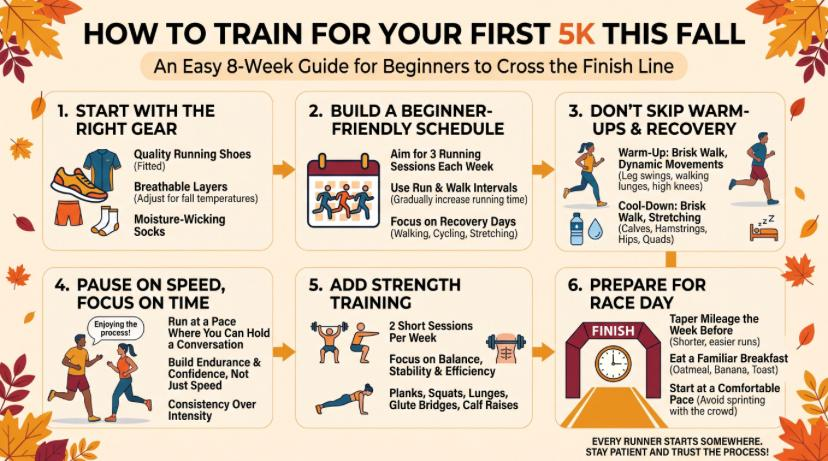
Start With the Right Gear
Before you log your first training run, make sure you have gear that keeps you comfortable. A quality pair of running shoes that fits your stride is the single most important purchase you’ll make. Proper footwear can improve comfort while helping reduce your risk of common overuse injuries.
Beyond shoes, think about what you’ll wear on those cool fall mornings. Breathable layers let you adjust as temperatures rise, while moisture-wicking socks help keep your feet dry.
Build a Beginner-Friendly Training Schedule
One of the biggest mistakes new runners make is trying to do too much too soon. Instead of running every day, aim for three running sessions each week over the course of about eight weeks.
A run-and-walk approach works especially well for beginners. Alternate short running intervals with walking, gradually increasing your running intervals as your fitness improves. This method helps your body adapt while making workouts feel much more manageable.
On the days between runs, focus on light activity like walking, cycling, or gentle stretching. Those recovery days are where your body gets stronger.
Don’t Skip Warm-Ups or Recovery
It’s tempting to lace up and start running immediately, but spending just a few minutes warming up can make your workout feel much easier. Begin with a brisk walk, followed by dynamic movements such as leg swings, walking lunges, and high knees, to prepare your muscles for the effort ahead.
Once your run is over, don’t stop abruptly. Walk for several minutes to gradually lower your heart rate before stretching your calves, hamstrings, hips, and quads. Pair your recovery routine with good hydration, nutritious meals, and plenty of sleep.
Focus on Time on Your Feet Instead of Speed
When you’re training for your first 5K, it’s easy to compare yourself to experienced runners posting impressive times online. Resist the urge. Your first race is about building endurance and confidence, not chasing a personal record.
Run at a pace where you could comfortably carry on a conversation. This “conversational pace” helps your body develop aerobic fitness without leaving you completely exhausted after every workout. As your stamina improves, you’ll naturally become faster. For now, celebrate every completed run, no matter how slow it feels. Consistency always beats intensity for beginners.
Add Strength Training To Become a Better Runner
Running is only one piece of the puzzle. Strength training helps improve balance, stability, and running efficiency while reducing the risk of common injuries.
You don’t need a gym membership or heavy equipment, either. Bodyweight exercises such as squats, lunges, glute bridges, calf raises, planks, and side planks can strengthen the muscles that support every stride. Two short strength sessions each week are enough to complement your running schedule.
Don’t forget your core. A stronger core improves posture and helps you maintain good running form as fatigue sets in during longer workouts.
Prepare for Race Day Like a Pro
The week before your 5K isn’t the time to squeeze in extra miles. Stick to shorter, easier runs and give your body time to recover. Make sure you’re staying hydrated, getting enough sleep, and eating balanced meals throughout the week.
On race morning, eat a familiar breakfast that provides lasting energy, such as oatmeal, toast with peanut butter, or a banana. Avoid experimenting with new foods that could upset your stomach.
When the race begins, start at a comfortable pace instead of sprinting with the crowd. Settle into your rhythm, enjoy the excitement around you, and save enough energy to finish strong. Crossing your first finish line is an accomplishment worth celebrating, regardless of your finishing time.
Every Runner Starts Somewhere
Training for your first 5K may feel intimidating at first, but every run brings you one step closer to your goal. Stay patient with yourself, trust the process, and remember that progress isn’t always measured by speed.
By following a realistic training plan, wearing comfortable gear, and giving your body the recovery it needs, you’ll be well prepared for race day. Before you know it, you’ll be crossing that finish line with a sense of pride.