When people talk about mental health, the usual suspects show up fast: stress, sleep, therapy, hormones, and brain chemicals. All of these factors matter, but there’s another player quietly working behind the scenes: your mitochondria.
They help turn nutrients into energy your body can actually use. And because your brain is one of the most energy-hungry organs in the body, your mood may be more connected to cellular energy than most everyday mental health conversations suggest.
This does not mean mitochondria are the cause behind every bad day. However, when energy, stress, focus, and emotional resilience all feel off, it is worth asking whether your cells have enough support to keep up, and how C15 fatty acid supplements can help you feel your best.
What Do Mitochondria Do?
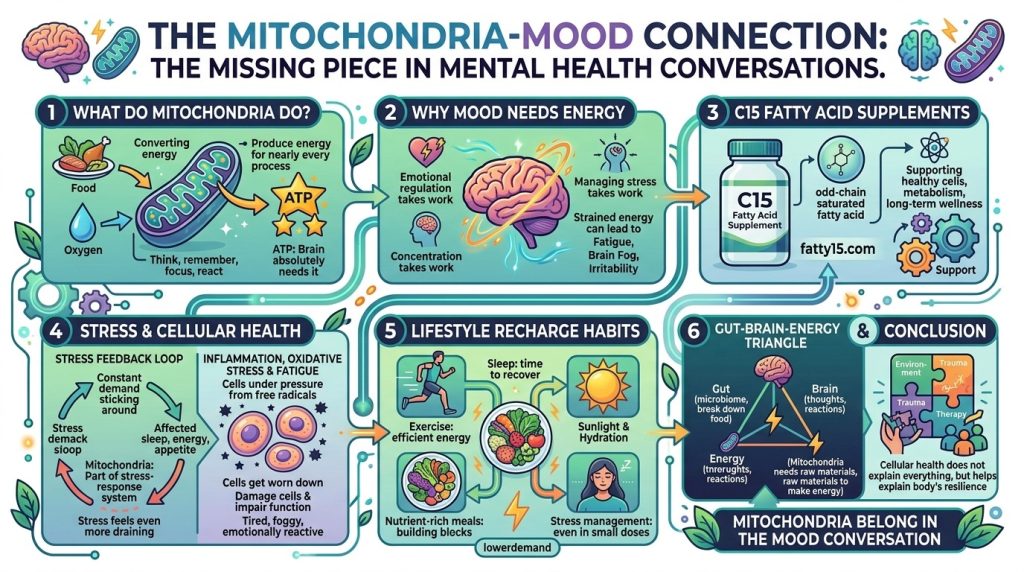
Mitochondria are tiny structures inside your cells that help produce energy, powering nearly every process your body relies on to function properly. Found in nearly every cell, they work continuously in the background, turning what you eat and breathe into usable fuel.
They help convert food and oxygen into ATP, which is the body’s main usable energy source. Your muscles need it to move. Your heart needs it to keep beating. Your brain absolutely needs it, especially when you are thinking, remembering, focusing, and reacting to stimuli.
Why Your Mood Needs More Energy Than You Think
Emotional regulation takes work. Concentration takes work. Managing stress takes work. The brain uses a lot of energy to process information, manage emotions, and respond to challenges. When your energy systems feel strained, you may notice more fatigue, brain fog, irritability, or the feeling that everything is harder to accomplish than it should be.
The Impact of C15 Fatty Acid Supplements
Your mitochondria rely on the nutrients you give your body, and researchers are increasingly interested in how certain fats may support cellular health. For example, C15 fatty acid supplements have gained attention because C15:0 is an odd-chain saturated fatty acid being studied for its potential role in supporting healthy cells, metabolism, and long-term wellness.
The Stress-Mitochondria Feedback Loop
Stress is a full-body event. When stress sticks around, the body has to work harder to stay balanced. That extra demand can affect sleep, energy, appetite, and recovery.
Mitochondria are part of that stress-response system. When the body is constantly under pressure, cellular energy systems may have less room to recharge. Over time, that can make stress feel even more draining.
Inflammation, Oxidative Stress, and Fatigue
Oxidative stress is simple: cells can get worn down when they are under too much pressure for too long. This happens when free radicals, unstable molecules produced through normal metabolism and outside factors like poor sleep or stress, build up faster than your body can neutralize them.
Over time, that imbalance can damage cells and impair their function. When the body is dealing with inflammation or oxidative stress, you may feel tired, foggy, or more emotionally reactive.
The Gut-Brain-Energy Triangle
Your gut and brain are in constant communication. The gut helps break down food, absorb nutrients, and interact with the microbiome, all of which can influence how supported your body feels from the inside out.
Those nutrients matter because mitochondria need raw materials to make energy. A balanced diet with protein, healthy fats, fiber, and colorful plant foods can give your body more of what it needs to keep the system running smoothly.
Lifestyle Habits That Help Your Cellular Batteries Recharge
The good news is that supporting your mitochondria does not require a complete lifestyle overhaul. Regular movement, quality sleep, sunlight, hydration, and balanced meals all help the body produce and use energy.
Exercise is especially interesting because it encourages the body to become more efficient at making energy. Sleep gives the brain and body time to recover. Nutrient-rich meals provide building blocks. Stress management, even in small doses, can help lower the constant demand on your system.
What This Does and Does Not Mean for Mental Health
Mitochondrial health is not a replacement for therapy, medication, medical care, or support from a qualified mental health professional. Instead, the mitochondria-mood connection is one piece of a much larger puzzle.
Mental health can be shaped by relationships, environment, trauma, genetics, hormones, sleep, nutrition, movement, and access to care. Cellular health does not explain everything, but it may help explain why the body’s energy systems deserve more attention in the conversation.
Why Mitochondria Belong in the Mood Conversation
Your mood is not just about mindset, and your brain needs more than positive thinking to function well. Behind every thought, reaction, decision, and deep sigh is a body working hard to produce energy.
Mitochondria may be tiny, but their job is enormous. When they are supported through better sleep, balanced nutrition, movement, stress care, and healthy daily habits, the entire system may feel more resilient.