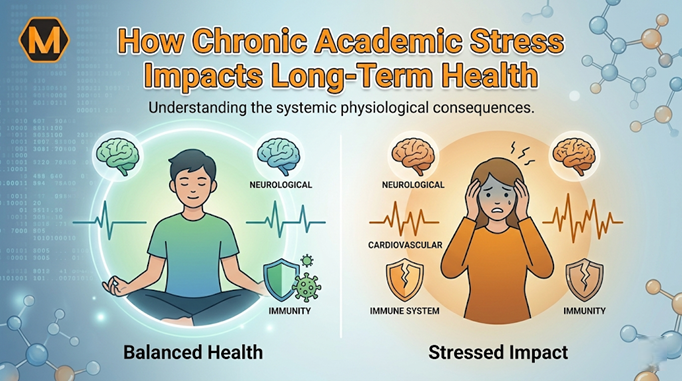
For many undergraduate students across the globe, the “college experience” is often synonymous with late nights, caffeine-fueled study sessions, and the constant pressure to perform. While a certain level of stress can act as a temporary motivator, the transition from acute pressure to chronic academic stress is a silent shift that can have profound implications for long-term physical and mental health. When the body remains in a permanent state of “fight or flight,” the biological systems designed to protect us begin to wear down, leading to consequences that last far beyond graduation day.
Understanding the physiological mechanics of stress is the first step toward managing it. When you face a looming deadline, your adrenal glands release cortisol, often called the body’s “stress hormone.” In short bursts, cortisol is helpful; it increases glucose in the bloodstream and enhances the brain’s use of glucose to repair tissues. However, when a student is perpetually worried about clinical placements, heavy reading loads, or complex grading rubrics, cortisol levels never return to their natural baseline. This is especially prevalent in demanding healthcare fields. For those struggling to balance intense practical requirements with academic theory, finding reliable resources to write my nursing essay can provide the necessary breathing room to lower these hormone levels and prevent burnout before it turns into clinical exhaustion.
The Systematic Impact of Prolonged Pressure
The human body is not built to sustain high-stress levels for four or more years straight. Chronic stress acts like a slow-moving tide, gradually eroding various bodily functions. It is not just a feeling of being “busy”; it is a systemic biological tax. When we ignore the signs of academic overload, we risk compromising our future vitality.
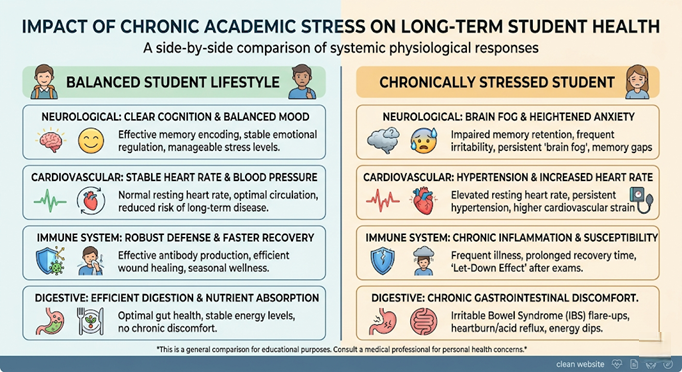
To understand the scope of this issue, we must look at how different bodily systems react to the sustained pressure of undergraduate life:
| Body System | Short-Term Effect | Long-Term Health Risk |
| Cardiovascular | Increased heart rate and palpitations | Hypertension, heart disease, and stroke |
| Immune System | Temporary boost in survival energy | Increased susceptibility to chronic infections |
| Digestive | “Butterflies,” nausea, or upset stomach | IBS, acid reflux, and chronic inflammation |
| Neurological | Heightened alertness and “jitters” | Anxiety, depression, and permanent memory loss |
| Musculoskeletal | Tension headaches and neck pain | Chronic migraines and permanent postural issues |
Cognitive Decline and the Memory Paradox
One of the most frustrating ironies of academic stress is that the very thing you are trying to achieve—learning—is actively hindered by the stress of trying to learn. High levels of cortisol can actually shrink the hippocampus, the part of the brain responsible for memory and emotional regulation. This leads to a persistent “brain fog” that makes it harder to retain information, requiring more hours of study, which in turn creates more stress.
To break this cycle, many students look for ways to manage their workload more effectively. While some use time-blocking or meditation, others realize that delegating specific tasks is a legitimate professional skill used in the corporate world. When the sheer volume of work threatens your mental clarity and physical health, opting for a professional service at Myassignmenthelp for writing essays for money can be a practical way to reclaim your schedule. By choosing to invest in expert assistance, you can focus on high-level comprehension and physical recovery, ensuring that your long-term cognitive health remains intact while still meeting your academic requirements.
The Invisible Toll on Physical Immunity
Have you ever noticed that you get sick the moment finals week ends? This is known as the “Let-Down Effect.” While you are in the thick of a high-pressure week, your immune system is in an overactive state. Once the pressure hits a plateau and you finally relax, the immune response crashes, leaving you vulnerable to every virus in the dormitory or lecture hall. Over several years, this repeated cycle of inflammation and crashing can lead to more serious autoimmune issues or chronic fatigue syndrome.
Furthermore, chronic stress influences lifestyle choices. Students under pressure are more likely to reach for high-sugar, highly processed “comfort foods” and energy drinks. These provide a temporary spike in energy but lead to a massive insulin crash, further taxing the body’s internal chemistry. Over time, this leads to metabolic syndrome and a decreased ability for the body to regulate its own weight and energy levels.
The Global Perspective on Student Wellness
Academic stress is not a localized issue; it is a global phenomenon affecting students from London to Sydney, Toronto to Mumbai. The competitive nature of the modern job market has pushed the boundaries of what is expected from an undergraduate. However, the biological limit of the human body remains the same. A “Global Tone” in wellness means recognizing that your health is your most valuable asset. Without it, the degree you are working so hard for cannot be fully utilized.
Developing resilience is not about “toughing it out.” It is about making smart, strategic decisions regarding your time and energy. It means knowing when to push through a difficult chapter and when to seek external support to maintain your equilibrium.
Practical Strategies for Academic Longevity
Achieving a balance requires more than just “self-care” hashtags; it requires a structural change in how you approach your degree. Here are three ways to mitigate long-term damage:
- The 90-Minute Focus Block: The human brain can only maintain deep focus for about 90 minutes before performance drops significantly. Use a timer and force a 15-minute physical break—ideally away from all screens—to allow your nervous system to reset.
- Nutritional Buffering: Chronic stress depletes B vitamins, Vitamin C, and magnesium. Prioritize whole foods over processed snacks to give your nervous system the raw materials it needs to repair cellular damage caused by cortisol.
- Strategic Delegation: Recognize that you cannot do everything at a 100% success rate without a cost to your physical health. Identify which assignments are essential for your core learning and which ones can be supported by external academic resources. This isn’t “giving up”; it’s professional resource management.
The Psychological Component: Breaking the Guilt Cycle
Many students feel a sense of guilt when they aren’t studying every waking hour. This “productivity guilt” is a major driver of chronic stress. It is essential to reframe rest as a productive activity. Sleep is not “time lost”; it is the time when your brain flushes out toxins and encodes the information you learned during the day. Without adequate rest, your study hours are effectively wasted.
If you find yourself staring at a blank screen for three hours, your body is telling you that its resources are depleted. Listening to these signals early can prevent a full-blown burnout that could take months or years to recover from.
Frequently Asked Questions (FAQ)
Q: Can academic stress cause permanent health issues?
Ans: If left unmanaged for years, chronic stress contributes to long-term issues like hypertension, metabolic disorders, and chronic anxiety. However, the body is incredibly resilient; early intervention and lifestyle changes can reverse many of these effects.
Q: How do I know if my stress is “normal” or “chronic”?
Ans: Normal stress ends when the specific task is over (like a presentation). Chronic stress feels like a constant, heavy weight, even on weekends or holidays, and is often accompanied by sleep disturbances, digestive issues, and irritability.
Q: Does delegating assignments actually help reduce biological stress?
Ans: Yes. Academic delegation is a form of time management. By reducing the “volume” of tasks, you reduce the cognitive load, which allows your nervous system to exit the “fight or flight” mode and enter “rest and digest” mode.
Q: What are the first signs of burnout?
Ans: Common early signs include a lack of motivation for subjects you previously enjoyed, physical exhaustion that sleep doesn’t fix, and a feeling of cynicism toward your education.
Recommended Resources for Students
- The Sleep Foundation: Comprehensive tools for optimizing rest and understanding circadian rhythms during high-stress exam periods.
- Greater Good Science Center: Based at UC Berkeley, this resource offers science-based insights into building resilience and practicing mindfulness.
- WHO Mental Health Guidelines: Global standards for maintaining psychological safety and wellness in high-pressure academic and professional environments.
- The Pomodoro Technique: A time-management method that helps prevent cognitive fatigue by breaking work into manageable intervals.
About The Author
I am Georgia Taylor, a Senior Academic Consultant and content strategist with a dedicated focus on student wellness and educational success. With years of experience in managing diverse academic portfolios, I specialize in bridging the gap between rigorous curriculum requirements and sustainable study habits.