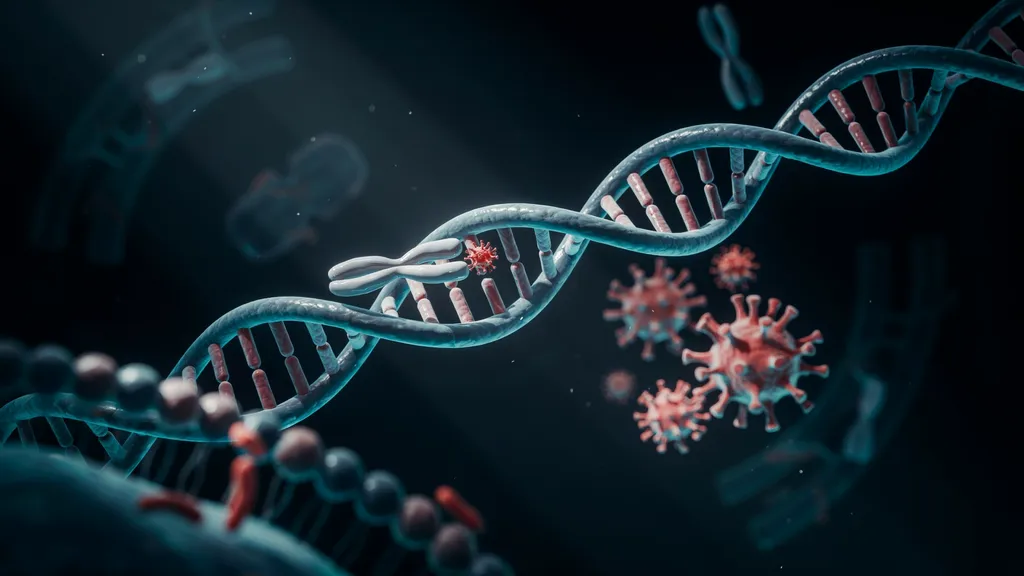
Biotech companies often work on ideas that are too small, too technical, or too abstract to explain with ordinary visuals.
A therapy may work at the cellular level. A diagnostic platform may move from sample collection to data interpretation. A research tool may support drug discovery through steps that are hard to show in photos. A lab workflow may involve equipment, biology, software, and analysis all working together.
That is a lot for one audience to understand quickly.
Animation helps by turning complex science into a visual story. It can show what happens inside the body, inside a lab process, or inside a research platform without forcing the viewer to read through dense technical language first.
For biotech brands, that clarity can support investors, partners, researchers, clinicians, patients, and internal teams.
Biotech Stories Often Happen at a Hidden Scale
Many biotech ideas happen where cameras cannot go.
Cells respond. Proteins bind. Pathways activate. Molecules interact. Samples move through systems. Data becomes insight. These processes may be central to the company’s value, but they are not easy to show with live footage.
Animation makes those hidden actions visible.
It can show a biological process step by step. It can simplify a pathway without losing the key meaning. It can help the audience understand where the problem begins and how the technology responds.
That matters because biotech communication often fails when people hear the terms but cannot picture the process.
Investors Need a Clear Entry Point
Biotech investors do not need every scientific detail in the first few minutes.
They need to understand the problem, the approach, the market need, and why the company’s method is worth attention. If the explanation becomes too dense too early, the bigger opportunity can get lost.
A focused animation can give investors a clean entry point.
It can show the disease challenge, introduce the technology, explain the mechanism, and connect that science to the practical value. After that, the investor can review the data, research documents, and pitch deck with stronger context.
The animation does not replace proof. It helps people understand the proof faster.
Lab Workflows Become Easier to Follow
Biotech workflows often involve many steps.
A sample may be collected, prepared, processed, tested, analyzed, and reported. A platform may include laboratory equipment, software, machine learning, clinical data, or automated systems.
Explaining that through text alone can feel heavy.
Animation can turn the workflow into a clean sequence. Each step can appear in the right order. The viewer can see how one action leads to the next. Complex systems start to feel more organized.
This is useful for diagnostics, research platforms, bioinformatics, lab automation, and drug discovery companies that need audiences to understand the full process without getting lost.
Accuracy Matters More Than Visual Drama
Biotech animation should never exaggerate the science.
A molecule should not behave in a misleading way. A therapy should not promise unsupported results. A diagnostic workflow should not suggest certainty or speed that the product cannot truly support.
Healthcare and biotech audiences are careful. They notice when visuals feel loose or inflated.
That is why scientific review is important from the start. The script, storyboard, visuals, and final animation should be checked against approved references and expert feedback.
A strong medical animation company will understand that trust comes from accuracy, not visual noise.
Different Audiences Need Different Versions
A biotech company may speak to several audiences at once, but one video cannot serve all of them perfectly.
Researchers may want more technical detail. Investors may need the commercial story. Patients may need simpler language and a calmer tone. Internal teams may need training content. Partners may need to understand workflow and integration.
The best approach is to define the main audience before writing the script.
A patient-facing video should not sound like a research presentation. An investor video should not become a full scientific lecture. A technical video should not oversimplify the core mechanism.
Audience clarity shapes everything: pacing, visuals, voiceover, terminology, and depth.
Biotech Animation Can Support Product Launches
Launching a biotech product or platform requires more than awareness.
The audience needs to understand what the product does, how it works, and why it is different. That is difficult when the value sits inside research logic, biology, or lab performance.
A launch animation can help structure the story.
It can begin with the problem, introduce the solution, explain the process, and end with the practical benefit. This keeps the message focused and easy to follow.
Companies often use 3D biotech animation services when they need to explain scientific mechanisms, lab workflows, product platforms, or therapeutic concepts with more visual control.
Training Teams Benefit From Visual Consistency
Biotech teams often need training across departments.
Sales teams may need to understand the science. Lab teams may need workflow references. Support teams may need to explain platform steps. New hires may need a clear introduction to the company’s technology.
Animation gives everyone a consistent visual foundation.
Instead of repeating the same explanation in different ways, teams can use one approved video to teach the core concept. Viewers can pause, replay, and return to it when needed.
That consistency matters when the science is complex and small misunderstandings can change the meaning.
Strong Scripts Keep Complex Science Manageable
The script is where biotech animation succeeds or fails.
A weak script tries to include everything: background science, market data, full mechanism, product story, proof points, workflow, benefits, and future plans. The result becomes crowded and hard to remember.
A stronger script chooses one main goal.
It may explain a mechanism. It may introduce a platform. It may support investors. It may train internal teams. It may educate patients.
Once that goal is clear, every scene should support it. Extra details can live in white papers, pitch decks, research pages, sales material, or follow-up videos.
Good Visuals Make Science Feel More Credible
Biotech brands need visuals that feel polished, but not exaggerated.
Clean animation, accurate references, careful pacing, and clear labeling can make complex science feel easier to trust. The visuals should guide the viewer, not overwhelm them.
That balance matters.
If the animation is too plain, the science may feel underdeveloped. If it is too dramatic, it may feel less credible. The best biotech videos sit in the middle: clear, accurate, polished, and focused.
They help the viewer say, “I understand what this company is working on.”
Conclusion
Biotech animation helps companies explain complex science with more clarity and confidence. It can show hidden biological processes, simplify lab workflows, support investor communication, improve training, and make product launches easier to understand. The best videos are accurate, focused, and shaped around the audience’s level of knowledge. When the science is difficult to picture, animation gives people a clearer way to see why it matters.
Frequently Asked Questions
What Is Biotech Animation?
Biotech animation is a visual format used to explain biological processes, lab workflows, diagnostics, therapies, research platforms, or scientific mechanisms.
Why Do Biotech Companies Use Animation?
Biotech companies use animation to simplify complex science, support investor presentations, train teams, explain products, and educate audiences.
Can Biotech Animation Help Investors?
Yes. It can help investors understand the problem, scientific approach, workflow, and value before reviewing deeper research or financial documents.
Where Can Biotech Animation Be Used?
It can be used on websites, pitch decks, conference screens, training platforms, investor presentations, sales material, and product launch pages.
How Long Should a Biotech Animation Be?
Most biotech animations work best between 60 and 120 seconds, depending on the audience, topic, and level of scientific detail needed.